Today in history: Harry Galt’s death and crackdown in Ankole

Today in History: Harry Galt’s Death and Crackdown in Ankole
By editor
Ibanda
The assassination of Harry George Galt on May 19, 1905, remains one of the most dramatic and consequential moments in Uganda’s colonial history.
More than a century later, the killing of the Acting Sub-Commissioner for the Western Province still stands as a defining historical marker in Ankole and wider western Uganda.
Galt had been travelling from Fort Portal toward Mbarara, then the administrative centre of Ankole, during a period when British colonial rule was still being consolidated across the protectorate.
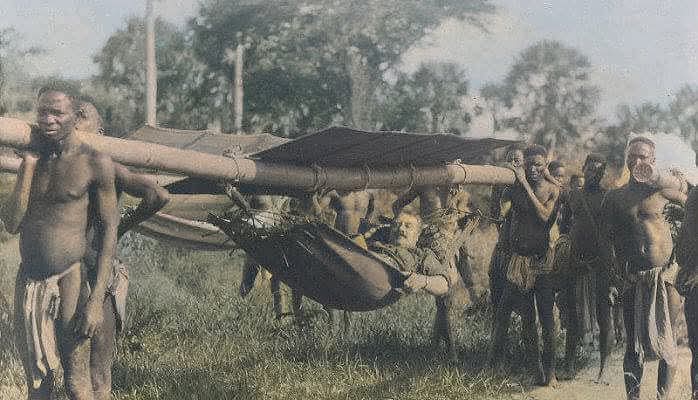
Accounts from local oral history describe him as a harsh and feared official who allegedly forced exhausted local porters to carry him and his luggage over long distances with little rest.
By evening on May 19, Galt stopped at a government mud-and-grass rest house in Ibanda, near present-day Kagongo. As dusk fell, he sat reading on the verandah, seemingly unaware that a local man named Rutaraka had slipped unnoticed through the compound fence.
Rutaraka reportedly moved within a few yards of the colonial officer before hurling a spear directly into Galt’s chest.
Mortally wounded, Galt staggered toward the kitchen area and reportedly told his cook that a native had speared him before collapsing and dying within minutes.
The attacker fled into the bush. Fearing the violent retaliation that would follow, Rutaraka later took his own life by hanging.
The killing sent shockwaves through the British colonial administration because Galt became the only senior British administrative officer murdered in Uganda during the protectorate era.
The colonial authorities reacted with alarm and suspicion, refusing to believe that a lone villager could have carried out such an attack without wider political backing.
Led by Deputy Commissioner George Wilson, the British launched a sweeping crackdown across Ankole. Two local chiefs were arrested and accused of masterminding the assassination.
The attacker fled into the bush. Fearing the violent retaliation that would follow, Rutaraka later took his own life by hanging.
The killing sent shockwaves through the British colonial administration because Galt became the only senior British administrative officer murdered in Uganda during the protectorate era.
The colonial authorities reacted with alarm and suspicion, refusing to believe that a lone villager could have carried out such an attack without wider political backing.
Led by Deputy Commissioner George Wilson, the British launched a sweeping crackdown across Ankole. Two local chiefs were arrested and accused of masterminding the assassination.
They were convicted and sentenced to death by the High Court in Entebbe, although the convictions were later overturned on appeal after judges found there was no credible evidence linking them to the killing.
The colonial government also suspended the 1901 Ankole Agreement, stripping the Omugabe and his chiefs of official authority and privileges.
Heavy punishments followed, including collective fines imposed on communities across the region, with thousands of cattle confiscated as part of the reprisals.
The British administration then moved to ensure the assassination would remain permanently etched into the landscape of western Uganda.
Governor Hesketh Bell ordered the construction of a stone pyramid monument at the site in Ibanda where Galt died. Local residents were forced to carry stones and build the structure themselves.
The monument still stands today as one of the most visible colonial memorials in the region.
In Mbarara, a road on Booma Hill was named Galt Road, embedding the colonial officer’s name into the administrative geography of western Uganda.
Historians later viewed the assassination as more than an isolated act of violence. The killing exposed the tensions underpinning early British indirect rule in Ankole, where colonial authorities relied heavily on the Bahima elite to govern the larger Bairu population.
Forced labour, taxation, and rigid class structures had generated growing resentment among ordinary communities.
For generations in western Uganda, the death of Galt became a chronological landmark. Elders used it as a reference point to date births, deaths, migrations, and major community events, turning one violent evening in Ibanda into a lasting marker of memory and resistance in Uganda’s colonial past.
End