Women leaders warn of persistent political intimidation after January election

Women Leaders Warn of Persistent Political Intimidation after January Election
By Editor
National
Women politicians and activists have raised concerns over continued intimidation, financial barriers and shrinking civic space following Uganda’s January 2026 general elections, warning that the environment could discourage women from participating in leadership.
Speaking during the post-election National Women in Leadership Conference organized by Uganda Women’s Network (UWONET), National Coordinator of the Alliance for National Transformation, Alice Alaso, said women in politics continue to face what she described as “psychological warfare” despite the conclusion of the elections.
Alaso said female candidates and leaders are still subjected to threats, online harassment, character attacks and intimidation, with some incidents affecting their families.
“We are battling psychological warfare, threats, character assassination, online abuse and sexualized attacks,” she said, revealing that during a previous election cycle she considered sending her child abroad because of security threats.
She warned that the hostile political environment risks discouraging more women from seeking leadership positions.
“We are sending a message that politics is dangerous,” Alaso said.
The ANT official also criticized the rising cost of political participation, saying nomination fees, campaign financing demands and vote buying during the January elections disadvantaged women with limited financial resources.
According to Alaso, the increasing commercialization of politics has “auctioned leadership to the highest bidder,” undermining fair competition.
She further raised concerns over restrictions on civic space, including tighter controls on civil society organizations, increased digital surveillance and disruptions of public gatherings, saying these continue to weaken civic engagement even after the elections.
Despite women playing a major role as voters and mobilisers during the polls, Alaso said they remain underrepresented in key decision-making positions.
“Women’s Labour is needed, but their influence is denied,” she said.
She called for reforms in electoral justice, political financing and internal party structures, warning that entrenched “godfathers” continue to block women’s advancement in politics.
Alaso also urged leaders to move beyond numerical representation and focus on meaningful empowerment through investment in young women leaders and broader cultural change to normalize women’s leadership.
She appealed for stronger cross-party coordination among women leaders to push for reforms that guarantee safety, fairness and equal political participation.
Meanwhile, Rita Aciro, the Executive Director of UWONET, said the post-election period should be used to strengthen unity among women leaders and develop a shared national agenda.
“This is a moment to reflect, recommit, and rise,” Aciro said, urging women in politics, civil society, business and community leadership to put aside divisions.
She warned that fragmentation among women could slow progress on gender equality and the empowerment of girls.
“We cannot afford to be divided because our cause for women’s rights and gender equality is still high on the agenda,” she said.
Aciro called for the development of a coordinated five-year agenda for women, noting that current female leaders are beneficiaries of sacrifices made by earlier generations.
“We are in these spaces because other women sacrificed,” she said.
While acknowledging gains in women’s representation, Aciro cautioned that new challenges are emerging regarding the quality and influence of women’s leadership.
“We are now seeing issues of quality. As we address numbers, we must also address influence and impact,” she added.
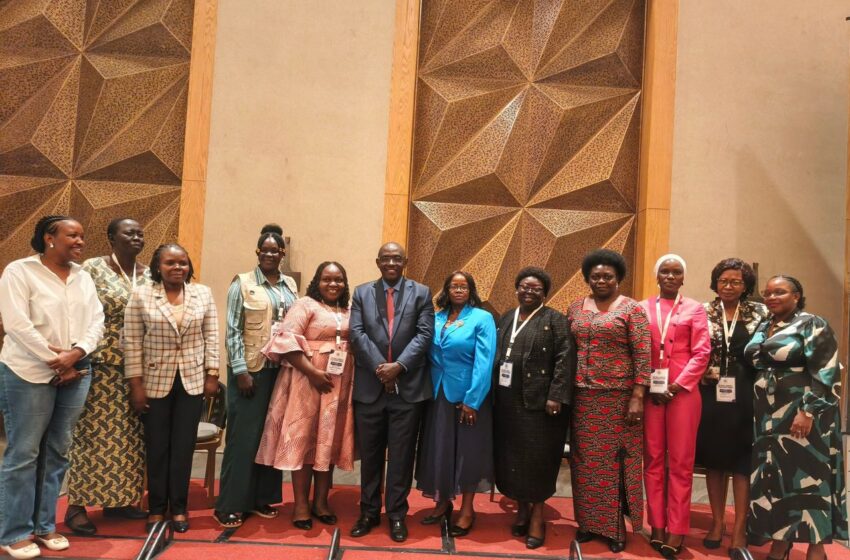
The conference brought together women leaders from political parties, civil society, local government and community structures to harmonize priorities following the January 2026 elections.
End