Women overtake men in informal jobs as sector expands to 1.7 million workers -UBOS

Women Overtake Men in Informal Jobs as Sector Expands to 7.1 Million Workers – UBOS
By Editor
National
Women have overtaken men in Uganda’s informal labour market, according to new findings from the Uganda Bureau of Statistics (UBOS), underscoring a significant shift in the country’s employment structure as the sector continues to dominate job creation.
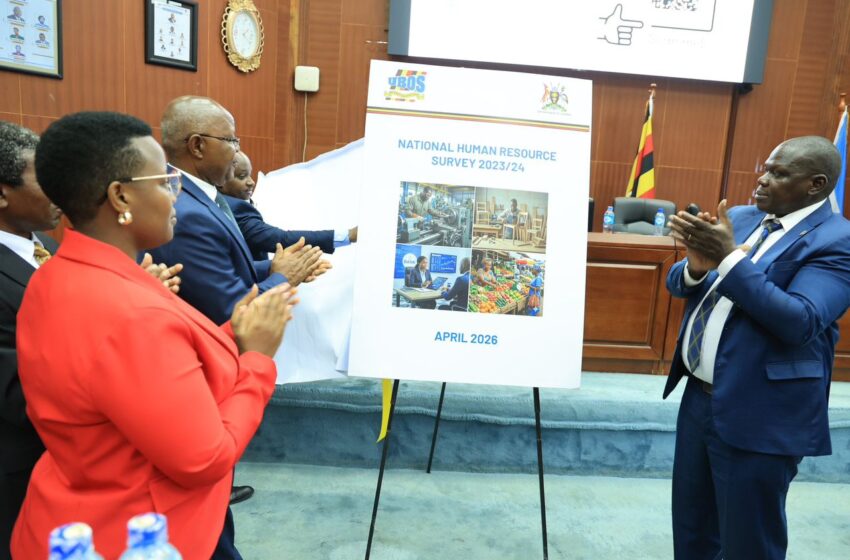
The findings were released during the launch of the National Human Resource Survey 2023/24, which shows that Uganda’s informal sector now employs about 7.1 million people, making it the largest source of employment in the country.
In contrast, the formal sector, including government and private institutions, accounts for just over 2.2 million jobs.
The survey indicates that women now form a larger share of workers in the informal economy compared to men, marking a reversal of earlier trends in the labour market.
In contrast, the formal sector, including government and private institutions, accounts for just over 2.2 million jobs.
The survey indicates that women now form a larger share of workers in the informal economy compared to men, marking a reversal of earlier trends in the labour market.
He added that disaggregated data shows a clear shift in gender participation within the sector.
“If you unpack this, we see that females are more in the informal sector compared to males,” he said.
The survey further reveals that young people constitute the largest share of the workforce, reinforcing the role of the informal economy in absorbing Uganda’s growing youth population.
However, UBOS acknowledged gaps in data coverage, particularly among micro-enterprises. Aguta noted that businesses employing between one and four workers were not fully captured, meaning the actual size of the informal economy could be larger than reported.
“It means that there are some one to four employee-size establishments that were not covered,” he said, adding that a follow-up study is planned to bridge the gap.
He also pointed to challenges encountered during data collection, including reluctance from some businesses to participate due to concerns about confidentiality.
“There are some establishments that were not sure whether they should give us this information,” Aguta said, noting that UBOS had to assure respondents that the data would not be used for tax enforcement.
Despite these challenges, the survey covered 2,145 establishments, most of them in the private sector, reaffirming its dominant role in employment creation.
UBOS also reported improvements in workplace safety practices compared to previous assessments.
The UBOS Executive Director Chris Mukiza said the findings highlight the central role of the informal sector in sustaining livelihoods across the country, cautioning against abrupt attempts to formalise it.