Museveni assures WHO of Uganda’s readiness to contain Ebola

Museveni Assures WHO of Uganda’s Readiness to Contain Ebola
By Editor
Health
President Museveni has assured the World Health Organization (WHO) of Uganda’s continued preparedness to contain the on-going Ebola outbreak, emphasizing the need for stronger regional collaboration and swift public health interventions to prevent further spread of the disease.
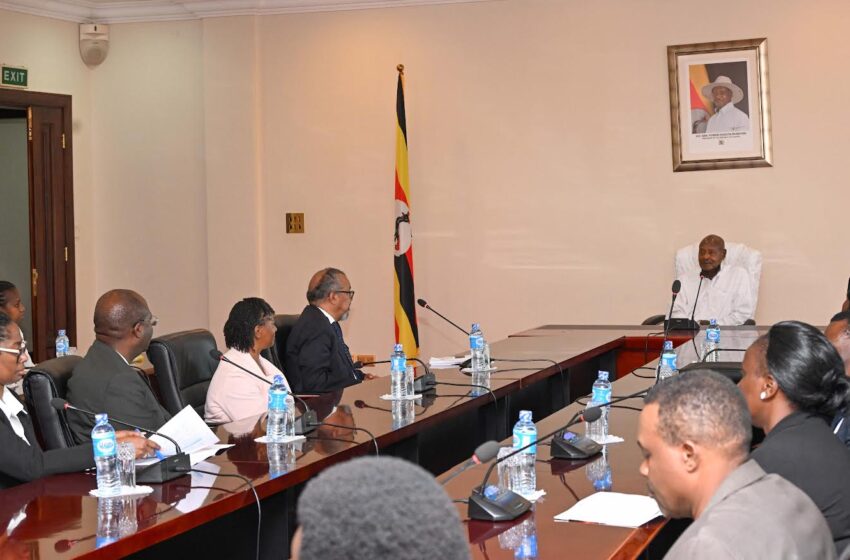
The President made the remarks on Tuesday during a meeting with the WHO Director-General, Dr Tedros Adhanom Ghebreyesus, at State House Entebbe. The meeting was attended by senior officials from the Ministry of Health and the WHO Uganda Country Office.
Museveni said Uganda remains vigilant and has put in place robust measures to contain the outbreak while working closely with neighbouring countries, particularly the Democratic Republic of Congo (DRC), where some of the cases originated.
He revealed that he had held discussions with DRC President Félix Tshisekedi on strengthening cooperation between the two countries to curb the cross-border spread of Ebola.
“We have been engaging our counterparts in the DRC to ensure that we work together in addressing this challenge,” Museveni said.
The Permanent Secretary in the Ministry of Health, Dr. Diana Atwine, briefed the meeting on the status of the outbreak, revealing that Uganda is currently managing 19 confirmed Ebola cases.
According to Atwine, 14 of the confirmed cases involve members of the same family who entered Uganda from the DRC. She, however, reported progress in containment efforts, noting that no new Ebola case had been recorded in the previous three days.
“Our surveillance and response teams remain fully engaged. We continue to monitor contacts, strengthen screening measures, and ensure that all suspected cases are promptly identified and managed,” Atwine said.
She further disclosed that the Ministry of Health had identified four strategic locations near the Uganda-DRC border where medical camps would be established inside the DRC to support local health authorities in managing Ebola cases.
The proposed treatment and response centres are intended to serve communities near the border and reduce the number of Ebola patients crossing into Uganda in search of treatment.
Atwine explained that many Congolese patients have increasingly sought treatment in Uganda due to confidence in the country’s ability to effectively manage epidemics and public health emergencies.
Health Minister Dr. Chris Baryomunsi said the initiative would strengthen cross-border disease control efforts and help address the outbreak closer to its source.
He noted that establishing treatment facilities within the DRC would significantly reduce the movement of Ebola patients across the border while supporting local response efforts.
Museveni welcomed the proposal and advised that the treatment centres be established as close to the border as possible to effectively serve vulnerable communities.
“It should be near the border, not far inside the DRC, because we are targeting those who are trying to escape and seek treatment elsewhere,” he said.
The President also highlighted the government’s decision to suspend this year’s Uganda Martyrs Day celebrations at Namugongo, one of the country’s largest annual religious gatherings.
The event typically attracts more than three million pilgrims and visitors from Uganda, the DRC, Tanzania, Kenya, West Africa and other parts of the world.
Museveni said the suspension was a necessary public health measure aimed at preventing a possible surge in infections.
End